
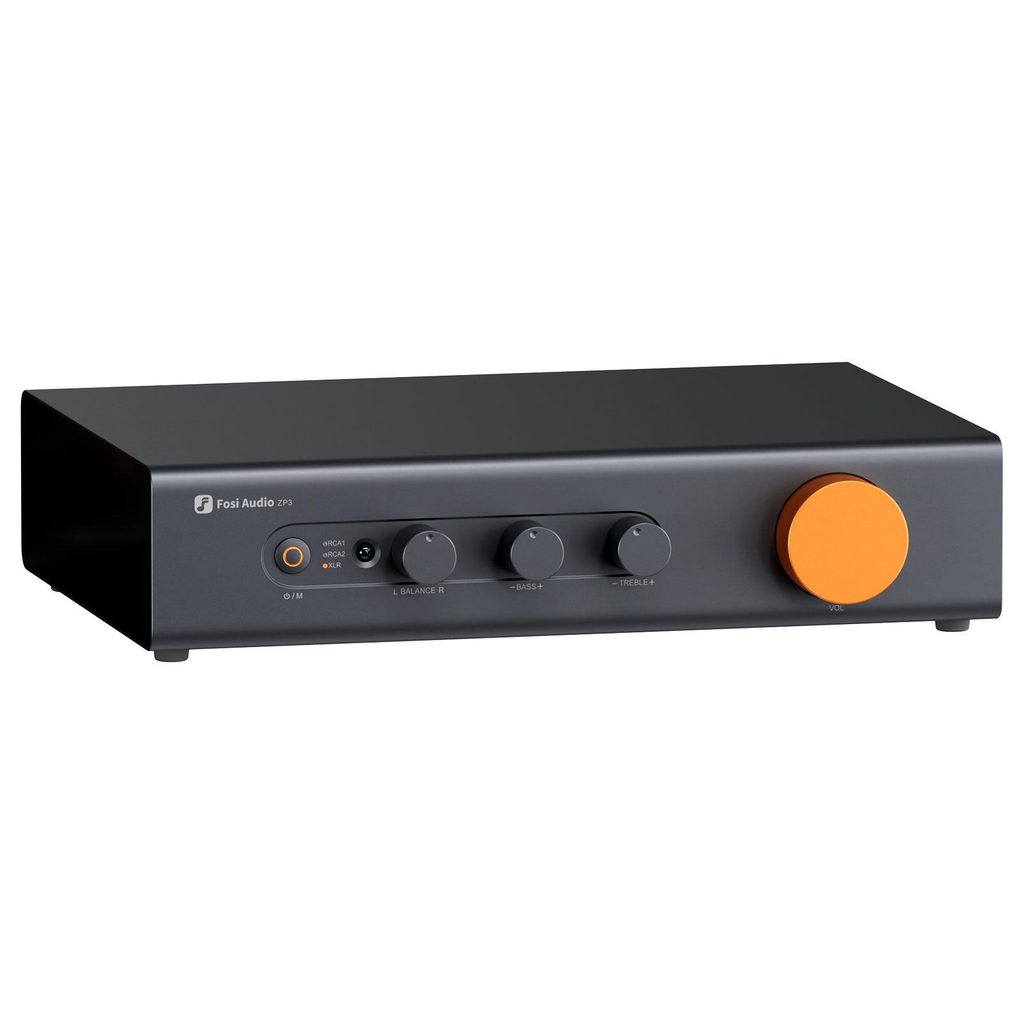
Every audio system has a quiet worker that most listeners never think about: the preamplifier. It sits between your sources and your power amplifier, handling signals too small for the power amp to use directly, and it shapes the sound less by adding anything than by preparing everything correctly. When it does its job well, you never notice it. When it does not, everything downstream suffers.
Understanding what audio preamplifiers do is the fastest way to understand why systems are built the way they are — and why skipping or cheaping out on this stage causes problems that no speaker upgrade can fix. The job is the same in a living room and a recording studio, even though the details differ.
The Core Job: Small Signals, Correctly Prepared
Sources produce wildly different signal levels. A microphone puts out thousandths of a volt. A turntable cartridge is similarly faint. A CD player or streamer outputs a healthy line-level signal. A power amplifier expects one consistent level at its input, and it expects a volume control somewhere. The preamplifier is the stage that reconciles all of this: it boosts weak signals, leaves strong ones alone, offers volume and source selection, and presents a clean, stable signal to the power amp.
Two qualities define good audio preamplifiers: they must add as little noise as possible while boosting, and they must not distort the signal they handle. Both are harder than they sound, because boosting a tiny signal also boosts any noise picked up along the way. That is why preamp design obsesses over clean power supplies, careful circuit layout, and shielding — the unglamorous engineering that decides whether the result sounds transparent or veiled.
In the Living Room: Source Selection and Control
At home, the preamplifier is usually part of an integrated amplifier or a receiver, and its most visible job is switching: turntable, streamer, television, CD player, all routed to one volume control. It also applies tone controls or room correction if you use them, and it provides the phono equalization for vinyl if a phono stage is included.
The home listener rarely thinks about gain, because home sources are mostly line-level and forgiving. The exception is vinyl, where the preamp stage matters enormously, and microphones for karaoke or home recording, where proper gain staging suddenly becomes very audible. For most living-room systems, a competent built-in preamp section is entirely sufficient — separate audio preamplifiers become interesting only when the system grows more ambitious.
In the Studio: Gain Is Everything
In recording, the preamplifier is a creative tool, not just plumbing. Microphone preamps determine how much of a performance character survives: a clean, transparent preamp captures exactly what the microphone heard, while a colored preamp adds warmth or presence that engineers choose deliberately. The difference is audible in every vocal and instrument track, which is why studios own multiple preamps the way guitarists own multiple guitars.
Studio preamps also face a harder technical job than home units. Microphone signals are far weaker than line level, so the gain required is much higher — sixty decibels or more — and every decibel of gain is an opportunity for noise. audio preamplifiers that stay quiet at high gain are genuinely difficult engineering, and that is why professionals pay serious money for this one stage above almost all others.
Preamps vs Power Amps: The Partnership
The division of labor is simple once you see it. The preamp handles small signals with precision: selection, volume, tone, and gentle boosting. The power amp handles one thing only: delivering large currents to speakers. Neither can do the other job well, which is why even all-in-one integrated amplifiers contain both sections internally, carefully separated.
audio preamplifiers earn their place in this partnership by being the stage where the signal is most vulnerable. Power amps deal with big, robust signals; speakers deal with watts. The preamp deals with millivolts, where every imperfection is proportionally huge. Treat that stage with respect and the rest of the system has a clean foundation to build on.
Choosing: What to Look For
For home use, look for quiet operation, enough inputs for your sources, and a volume control that tracks evenly at low levels — cheap volume controls that unbalance the channels quietly are a common annoyance. For studio use, prioritize clean gain, adequate headroom, and the character you actually want, and audition with your own microphone if possible.
In both worlds, ignore exotic claims and trust the fundamentals: noise, distortion, and whether the unit does its job without drawing attention to itself. The best audio preamplifiers are the ones you forget are there. A preamp you never think about is a preamp doing everything right.
The preamplifier is audio quiet achiever: no glory, no drama, just the careful preparation that makes everything downstream possible. Understand its job and you understand the architecture of every system you will ever own — and you will know exactly where to look when something sounds not quite right.
