
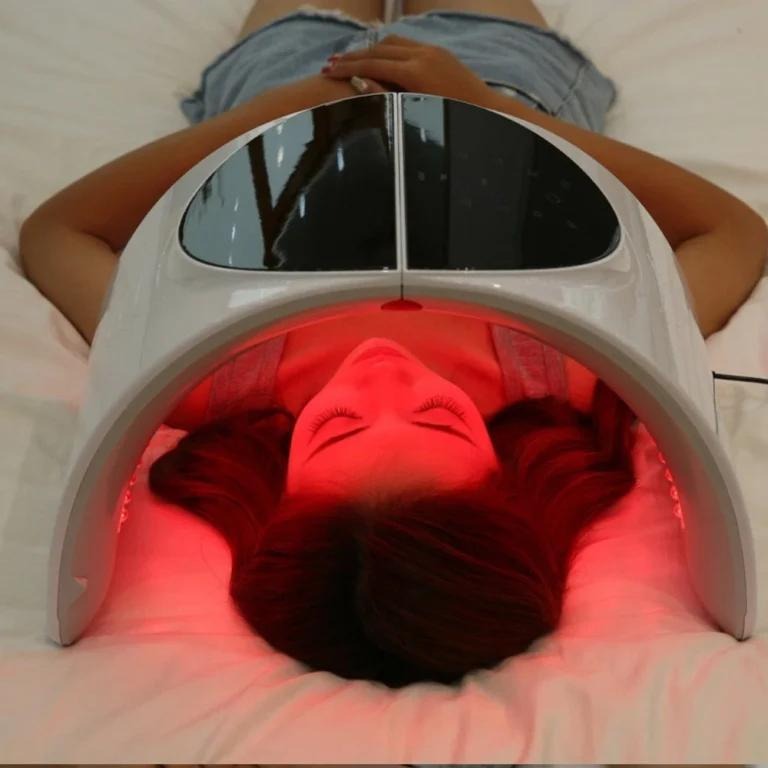
Shopping for a facial gadget is confusing: rollers, wands, microcurrent tools, LED masks, and heated plates all promise similar results at wildly different prices. A face massage devices can be a good purchase, but only if you buy for your skin and your habits rather than for the most impressive feature list.
This guide cuts through the marketing. It covers the types on the market, the features actually worth paying for, and the mistakes that turn a good tool into a drawer ornament.
Types on the market
Manual tools are the simplest: jade or quartz rollers and gua sha stones. They cost little, need no charging, and work well for lymphatic drainage and relaxation, but they rely entirely on your technique. Vibrating tools add sonic or pulsating motion, which can help products absorb and feels more effective, though the evidence for deeper benefits is thin.
Microcurrent tools send a tiny electrical current through the skin, claiming to tone facial muscles. Some users report a temporary firming effect, but results are subtle and require consistent use. A face massage devices in this category is the most expensive and the most likely to disappoint if you expect dramatic change. LED tools, meanwhile, target skin concerns with light rather than massage, and belong in a different buying decision altogether.
Features worth paying for
Adjustable intensity is the single most useful feature. Skin sensitivity varies by day and by area, and a tool with one speed will be too harsh somewhere or too weak everywhere. Easy cleaning comes second: smooth, non-porous heads stay hygienic, while textured heads trap residue.
Battery life and waterproofing matter more than they sound. A face massage devices that dies mid-routine or cannot be rinsed will quietly stop being used, and the best tool is the one you actually reach for. A sensible price is also a feature: for a first purchase, a mid-range tool teaches you what you like before you consider anything premium.
Mistakes to avoid
The biggest mistake is buying for someone else’s skin. A tool that transformed an influencer’s routine may irritate yours, especially if your skin is sensitive or reactive. A face massage devices should be chosen for your skin type first and its feature list second.
Other common mistakes include using the tool too often at first, skipping the slip product that lets it glide, and never cleaning the head. All three cause the irritation or breakouts that make people declare the tool useless, when the tool was never the problem. Start at twice a week, use a serum or oil, and clean the head after every session.
A simple buying checklist
Before you buy, run through this list. It takes two minutes and prevents most bad purchases.
- Skin type match: is this tool recommended for sensitive, normal, or resilient skin, and which are you?
- Intensity control: can you turn it down, not just up?
- Cleaning: can every part that touches your face be washed and dried easily?
- Charging: does it hold charge for at least a week of normal use?
- Returns: can you send it back if your skin reacts in the first two weeks?
- Price sanity: is this your first tool? If so, stay mid-range until you know what you like.
Where to start
If you are buying your first facial tool, start with a manual roller or a basic vibrating tool with adjustable intensity. Learn the motions, learn your skin’s tolerance, and only then consider microcurrent or premium options. Most people find that a simple, well-used tool beats an expensive one that lives in a drawer.
Knowing when to upgrade is as important as the first purchase. If your current tool still works, your skin is calm, and you use it regularly, there is no reason to replace it with a more expensive model. Marketing will insist otherwise, but the gains from upgrading a working tool are usually small. Upgrade when something concrete changes: your skin type shifts, perhaps after moving to a different climate or starting a new medication; your routine expands to include concerns the old tool cannot address, such as deeper muscle tension; or the tool itself wears out, with a battery that no longer holds charge or a head that cannot be cleaned properly. When you do upgrade, keep the old tool for travel or as a backup rather than throwing it away. And resist the bundle trap: sets that include five attachments often contain two you will use and three that gather dust. Buy the single tool that solves your actual problem, use it for a month, and only then consider add-ons. The most expensive tool is the one you never use, whatever its feature list promised.
Buying a facial massage tool is less about finding the best device and more about finding the one you will use correctly, consistently, and on your own skin. Match the tool to your skin type, insist on adjustable intensity and easy cleaning, and ignore the most dramatic claims. Do that, and the purchase is likely to be a good one.
