
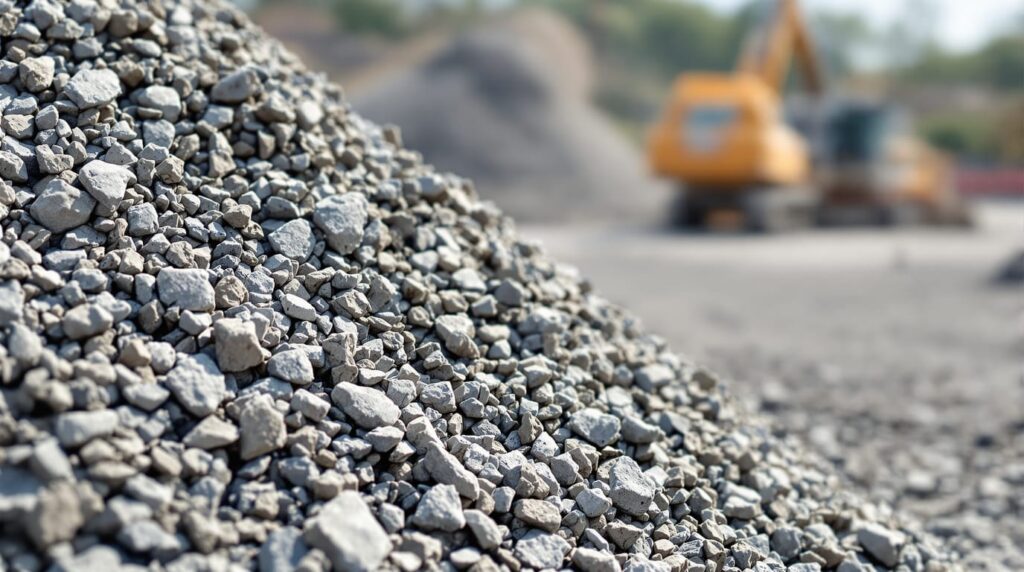
Not every material problem can be solved with a crusher. When feed material is loaded with clay, silt, or organic debris, running it through a crusher alone just produces contaminated aggregate that doesn’t meet spec and won’t sell at a premium price. This is where a portable wash plant for aggregate earns its place in the process — separating fines and contaminants from usable stone, sand, and gravel so the finished product actually meets the standards buyers expect.
For contractors and producers used to thinking in terms of crushing and screening alone, washing can feel like an unnecessary extra step. But for certain material types and certain end markets, it’s the difference between a saleable product and a stockpile that never moves.
Why Some Aggregate Needs Washing, Not Just Crushing
Crushing reduces material size. Screening separates material by size. Neither process removes clay, silt, or fine organic contamination bound to the surface of rock and gravel particles. When contaminated material is crushed and screened without washing, the contaminants simply get redistributed throughout the finished product rather than removed from it.
This matters most in applications with strict specifications — concrete aggregate, asphalt aggregate, and drainage stone all have limits on fines content and clay contamination. Material that fails these specs either has to be sold at a steep discount for lower-grade uses or rejected outright. Understanding how to remove clay from aggregate before it reaches the stockpile is often the deciding factor in whether a source material is even worth processing.
How Washing Fits Into the Production Process
A wash plant typically sits downstream of crushing and primary screening, using water to break the bond between fine contaminants and larger aggregate particles. Depending on the setup, this can involve:
- Scrubbing — agitating material to physically break apart clay clumps and coatings
- Screening with water sprays — rinsing material as it passes over screen decks to wash fines through rather than relying on dry separation alone
- Classifying — separating fine sand from silt and clay in a controlled water environment, so usable sand isn’t lost along with unwanted fines
The result is a cleaner, more consistent finished product across multiple size fractions, often produced simultaneously from a single pass through the plant.
Log Washer vs. Wash Plant: Which One Do You Need?
One of the most common points of confusion for producers new to washing equipment is the log washer vs wash plant question. While both are used to clean contaminated material, they serve different roles:
Log washers use paddles mounted on a rotating shaft (or shafts) to aggressively scrub and break apart heavily clay-bound material. They’re best suited for pit-run material with heavy clay coatings that need serious agitation before any other processing can happen effectively. Think of a log washer as the heavy-duty pre-treatment step for difficult source material.
Wash plants, on the other hand, are complete systems — combining scrubbing, screening, and classifying into one process that produces multiple sized, washed products ready for sale or further processing. A wash plant is the broader solution, and in many setups, a log washer functions as one component feeding into the larger wash plant system.
For producers dealing with consistently dirty pit material, pairing a log washer ahead of a wash plant often produces the cleanest results. For material that’s only moderately contaminated, a wash plant alone may be sufficient without the added log washer step.
Buying Considerations: Aggregate Washing Equipment for Sale
When evaluating aggregate washing equipment for sale, a few factors matter more than raw throughput numbers:
Water usage and recycling. Washing consumes significant water, and in many regions, water availability or discharge regulations make water recycling systems a near-necessity rather than an optional add-on. Closed-loop water systems that settle and reuse process water reduce both cost and permitting complexity.
Portability. For operations moving between sites or working pits with changing material sources, a portable, skid-mounted or track-mounted wash plant offers flexibility that stationary systems can’t match. Setup and teardown time should factor directly into the buying decision for multi-site operators.
Capacity match. A wash plant sized well beyond actual production needs adds unnecessary cost and water consumption, while an undersized plant becomes a bottleneck. Matching wash plant capacity to actual crushing and screening throughput avoids both problems.
Fines Management: What Happens After Washing
Removing clay and silt from aggregate doesn’t make the problem disappear — it just relocates it. Effective fines management in aggregate processing is what separates a well-run wash operation from one that trades a contamination problem for a wastewater and settling pond problem.
Most wash plants direct wash water into settling ponds or mechanical dewatering systems, where fine particles settle out and clarified water can be recirculated back into the process. Producers in water-restricted areas or those facing tighter discharge permits increasingly rely on mechanical dewatering — using filter presses or thickening systems — rather than open settling ponds, both to reduce water use and to manage the resulting fine material as a solid rather than a slurry.
Left unmanaged, fines can quickly overwhelm settling ponds, leading to permit violations or costly emergency dredging. Planning for fines management from the start, not as an afterthought, keeps a washing operation running smoothly over the long term.
Is a Wash Plant Worth the Investment?
For operations working exclusively with clean, low-clay material, a wash plant may add cost without meaningful benefit. But for producers working pit-run material, recycled demolition debris, or any source with variable clay and silt content, washing is often what determines whether the finished product can be sold into higher-value markets at all.
The math is straightforward: material that fails spec because of contamination sells for less — or doesn’t sell at all. A properly matched washing setup, whether that’s a standalone wash plant or a log washer paired with one, turns marginal source material into a product that meets the specs buyers are actually asking for.
The Bottom Line
Crushing and screening alone can’t solve a contamination problem. When clay, silt, or organic material is bound to aggregate, washing is the step that actually removes it, unlocking access to higher-value markets and tighter specifications. Understanding the difference between a log washer and a full wash plant, planning for water use and fines management from the outset, and matching equipment capacity to real production needs are the keys to getting a washing investment right the first time.
