
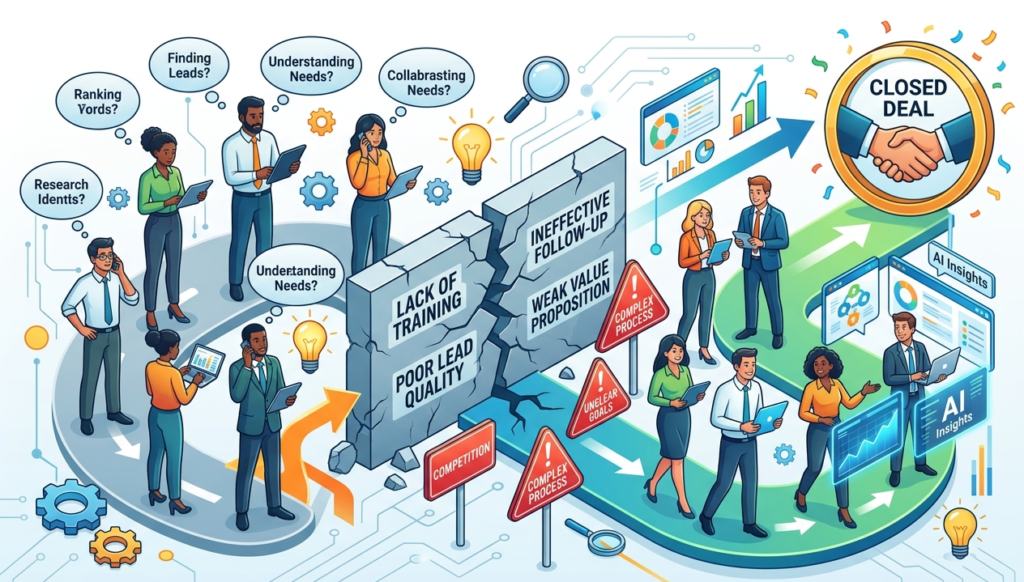
Sales teams work hard every day. They talk to prospects, send emails, and try to build trust. Yet many still struggle to close deals. This often happens because parts of the sales process break down early. Some companies use outbound telemarketing services to support outreach and lead activity, but many still face internal gaps that make closing deals harder than they should be. These problems are common across industries, yet they can be fixed with the right structure and support.
Closing deals takes more than talent. It requires clear systems, consistent actions, and the right support. When one part of the sales pipeline breaks down, everything else slows down. These problems are often hidden, but they can be fixed. Here are the key reasons sales teams fail to close deals, and what causes these issues in the first place.
1. Weak Lead Generation Drains the Sales Pipeline
Lead generation feeds the entire sales pipeline. When lead flow slows down, the sales team has fewer chances to close deals. Many companies struggle because they bring in the wrong type of leads.
Weak lead generation often begins with a poor understanding of client pain points. If a company does not know what its ideal customers care about, it attracts the wrong audience. This leads to wasted time and fewer wins.
Another issue is a weak sales funnel. If the funnel is not built to filter and guide leads, sales reps receive low-quality prospects. They spend time chasing people who are not a match for the Ideal Customer Profile.
Stronger lead generation starts with clear targeting. Companies often use data analytics, lead intelligence platforms, and simple automation to refine their approach. When the right people enter the funnel, sales teams have a much higher chance of closing deals.
2. Poor Lead Qualification Wastes Time and Kills Deals
Even if lead generation is strong, the next challenge is qualification. Without proper lead qualification, sales reps spend time talking to people who cannot buy. They may lack a budget, decision-making power, or a clear need.
Good qualifications depend on strong CRM platforms and accurate data. When this information is missing, reps make calls based on guesswork. This hurts conversion rate and overall sales performance.
Many teams also lack a clear structure. They do not follow a qualification checklist. They do not confirm key details. This creates confusion and wastes the seller’s time.
Better qualification starts with clean data, better sales tools, and simple processes. When leads are filtered early, sales conversations improve. Reps can focus on real opportunities rather than long-shot prospects.
3. Sales Prospects Slip Away Without Persistent Follow-Up
Follow-up is one of the biggest reasons deals fall apart. Many prospects need several touchpoints before they feel ready to move forward. But many teams lack a strong follow-up strategy.
Prospects often get busy. They forget to reply. Emails get lost. Without planned follow-ups, even warm prospects go cold.
Reps need a simple system. They need reminders, clear messaging, and a schedule that tells them when to reach out. CRM platforms help, but consistent action is what matters most.
Strong follow-up brings prospects back into the conversation. Without it, deals disappear quietly, and close rates drop fast.
4. Low Customer Engagement Slows Decision-Making
Modern buyers expect more from sales teams. They want answers fast. They want clear explanations. They want to see value early in the process. Low customer engagement slows everything down.
Engagement depends on how well a company understands client pain points. Prospects respond better when they feel understood. They also need simple, helpful materials. Sales enablement tools, like guides, proposals, and product info, help sales reps speak with confidence.
CRM platforms also support better engagement. When reps have instant access to key details, they can respond quickly and keep the conversation moving.
When engagement is low, prospects take longer to decide. Some lose interest. Some forget. This slows the entire sales process and lowers conversion rates.
5. Outbound Telemarketing Strategies Have Fallen Behind
Outbound calling still plays a major role in many sales strategies. But many teams use outdated methods. Old scripts, manual dialing, and weak targeting no longer work well.
Cold calling works best when paired with strong data analytics and clear targeting. Today’s buyers prefer short, direct conversations. They do not respond to generic pitches.
Sales reps also need simple, updated scripts. They need information that matches what buyers care about now. Outdated messages lead to quick rejections.
Many teams also struggle with low call volume. Manual dialing slows everything down. When contact rates drop, the sales pipeline shrinks.
Modern outbound calling strategies focus on better timing, better data, and better conversations. They help build trust early and guide prospects into the next step of the sales process.
6. Lead Conversion Breakdowns Leave Revenue on the Table
The final stage of the sales pipeline is where most deals should close. Yet many fall apart. Small issues at this stage create big losses.
Lead conversion depends on clear actions. Prospects need quick responses, simple proposals, and clear next steps. If any part of the process is slow or confusing, the prospect hesitates.
Many teams also struggle with CRM platforms that are not organized well. When information is scattered, reps respond slowly. Decisions get delayed.
Sales enablement also matters at this stage. Reps need strong closing techniques. They need tools that help them answer final questions and remove doubt.
When conversion steps are clear and simple, closing the deal becomes much easier.
Support Options That Help Address These Challenges
Some companies choose to use outside help to support their outreach, qualification, or follow-up work. These teams assist with calling, screening, data cleanup, and early-stage conversations. Many businesses work with providers that offer reliable outbound telemarketing services to strengthen their pipeline.
Here are well-known companies that offer support in this space:
- Teleperformance – Global customer experience and support provider
- Concentrix – Large-scale support in sales, service, and customer engagement
- OBI Services – Affordable Philippine-based support for outreach, lead qualification, and sales assistance
- TTEC – Global CX provider with outsourced sales teams
- Alorica – Enterprise contact solutions with multi-channel support
This is optional support, but it helps many teams stay consistent, improve lead flow, and close more deals over time.
Conclusion
Sales teams miss deals for many reasons. The problems often start early in the sales funnel and continue through the final stage. Weak lead generation, poor qualification, slow follow-ups, and low engagement all affect results. Outdated calling methods and unclear conversion processes add even more friction.
But all of these challenges can be fixed. When companies review their sales process and sales strategy, they uncover simple improvements. Even small changes can raise close rates and support steady revenue growth. A stronger sales pipeline leads to stronger performance.
