
Table of Contents
- What Duty of Care Means
- Who May Owe a Duty of Care?
- Why Visitor Status Can Matter
- When a Duty May Be Breached
- How Duty of Care Is Proven
- Common Defenses in Premises Liability Cases
- What to Do After a Property Injury
- Frequently Asked Questions
- Final Takeaway
In a premises liability case, “duty of care” refers to the legal responsibility a property owner, landlord, business operator, or other person in control of a property may have to take reasonable steps to keep visitors safe from foreseeable hazards. General educational information from https://poltlaw.com can help explain the issues that commonly arise, but the precise duty depends on the facts and the law of the state where the injury occurred.
Premises liability is a part of personal injury law involving harm connected to unsafe property conditions, such as wet floors, broken stairs, poor lighting, loose handrails, uneven pavement, falling merchandise, or inadequate security. A property owner or occupier may be responsible for dangerous conditions on the premises when the legal requirements for a claim are met.
What Duty Of Care Means
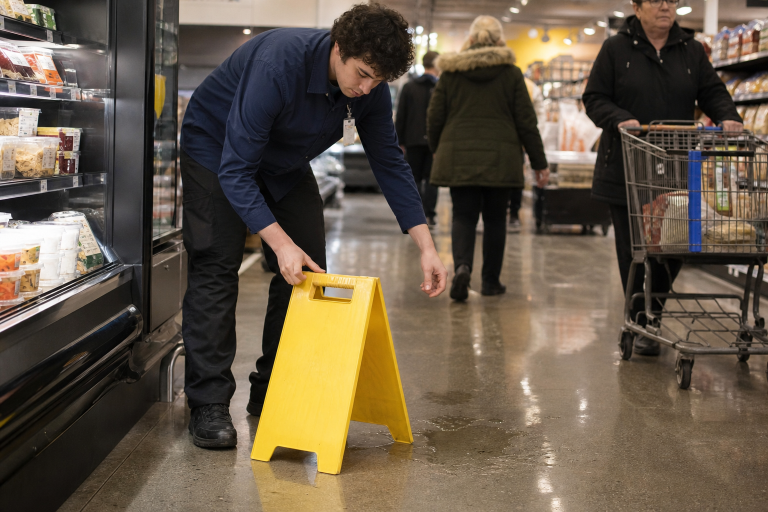
A duty of care is not a guarantee that no one will ever be hurt on a property. Instead, it generally requires reasonable conduct under the circumstances. For example, a grocery store is not expected to prevent every spill instantly. It may, however, be expected to use reasonable inspection and cleanup practices, address hazards it knows about, and warn customers about dangers that cannot be immediately corrected.
Duty is one element of a negligence claim. An injured person commonly must show that the defendant owed a legal duty, failed to meet it, and that the failure caused actual harm. The general negligence standard asks whether a person or business acted with the level of care a reasonable person would use in similar circumstances.
Who May Owe A Duty Of Care?
The person named in a premises liability claim is not always the person listed as the property owner. Responsibility may fall on the party that had possession, control, or maintenance duties for the area where the incident happened. Depending on the situation, that could include:
- A homeowner or residential landlord.
- A retail store, restaurant, hotel, or apartment complex.
- A commercial tenant that controls part of a building.
- A property management company.
- A maintenance contractor responsible for repairs, cleaning, snow removal, or security.
- A government entity that controls a public building, sidewalk, park, or transit area.
Control matters because the party with authority to inspect, repair, block access to, or warn about a hazardous area may be the party best positioned to prevent injuries. Contracts between owners, tenants, and contractors can also affect which party had a particular safety responsibility.
Why Visitor Status Can Matter
Many states historically categorized visitors as invitees, licensees, or trespassers. An invitee is generally someone entering property for a business purpose or because the public has been invited in, such as a shopper at a store. A social guest may be considered a licensee under some state laws. A trespasser enters without permission.
These categories still matter in some jurisdictions, but other states use a broader reasonable-care approach. The duty may also change when a property owner knows that children are likely to enter an area containing an unusual danger, such as an unsecured pool, abandoned equipment, or an attractive but hazardous structure.
When A Duty May Be Breached
A breach occurs when the responsible party does not take reasonable safety measures. The question is highly fact-specific. Courts and insurers may consider how long a condition existed, whether employees received prior complaints, whether routine inspections occurred, how easy the hazard was to correct, and whether the risk of injury was foreseeable.
Examples of conduct that may support a breach allegation include:
- Leaving a spill in a busy aisle without cleaning it or placing a warning sign.
- Ignoring repeated reports that a staircase has a loose handrail.
- Failing to replace burned-out lights in a poorly lit parking area.
- Allowing ice to accumulate in a commonly used entrance without reasonable treatment.
- Keeping damaged flooring, torn carpeting, or unstable shelving in use.
- Failing to address foreseeable security concerns after prior similar incidents.
Not every accident proves negligence. A visitor may fall for reasons unrelated to the property, and some risks are obvious or unavoidable. The central issue is whether the defendant knew, or reasonably should have known, of a dangerous condition and responded appropriately.
How Duty Of Care Is Proven
Evidence can help establish who controlled the property, what condition existed, and whether the responsible party had notice of it. Useful evidence may include photographs, surveillance video, incident reports, maintenance logs, inspection records, witness statements, employee communications, prior complaints, and records showing when repairs were made.
Timing can be especially important in a slip-and-fall case. A store may argue that a spill happened only moments before the fall and that staff did not have a reasonable opportunity to discover it. In response, video footage, cleaning logs, or witness testimony may clarify whether the condition had existed long enough that it should have been found and addressed.
Common Defenses In Premises Liability Cases
Property owners and insurers may dispute one or more parts of the claim. They may argue that the hazard was open and obvious, that they had no notice of it, that they used reasonable inspection procedures, or that the injured person was not permitted to be in the area.
They may also claim that the visitor was partly responsible, such as by ignoring a warning sign, entering a closed-off space, wearing unsafe footwear, or using a phone instead of watching where they were walking. State rules on shared fault vary, so partial responsibility does not automatically prevent recovery in every location.
What To Do After A Property Injury
After an injury, prioritize health and safety. Seek medical care when needed, report the incident promptly, and request a copy of any written incident report. Take photographs of the hazard, the surrounding area, visible injuries, and damaged belongings if it is safe to do so.
Preserve shoes, clothing, receipts, medical records, and communications related to the incident. Avoid assuming the cause of the fall or making statements that go beyond the facts. When injuries are serious, fault is disputed, or a public entity is involved, timely local legal guidance can be important because notice requirements and filing deadlines may be short.
Frequently Asked Questions
Does A Property Owner Owe The Same Duty To Everyone?
Not always. The visitor’s purpose, permission to enter, and the state’s premises liability rules can affect the duty. Some states still use visitor categories, while others focus more broadly on reasonable care.
Can A Business Be Liable If It Did Not Create The Hazard?
Possibly. Liability may depend on whether the business knew or should have known about the condition and had a reasonable chance to correct it or warn visitors.
What If There Was A Warning Sign?
A warning sign can be relevant, but it does not automatically end a claim. Its visibility, wording, placement, and whether the dangerous condition could have been reasonably fixed may all matter.
Is A Landlord Always Responsible For A Tenant’s Injury?
No. Responsibility may depend on the lease, the location of the hazard, the landlord’s control over the area, prior notice, and applicable state law. Common areas often raise different issues than conditions inside a tenant’s private unit.
Final Takeaway
Duty of care in a premises liability case is the obligation to act reasonably to prevent foreseeable harm on property. Whether that duty existed and was breached depends on control of the premises, the visitor’s status, the nature of the hazard, notice, and the safety steps that were reasonable under the circumstances.
