
Post Preview
Key Takeaways
- Health and safety should come before insurance paperwork or settlement discussions.
- Evidence, medical records, and expense documentation help show how an accident affected the injured person.
- An insurer may investigate fault, damages, coverage, and the reasonableness of treatment before making an offer.
- A settlement offer is negotiable, but accepting one generally ends the right to seek additional payment for the same claim.
- Keeping organized records can make the process clearer and reduce avoidable delays.
After a crash or other serious accident, a personal injury settlement may provide financial support for medical bills, lost income, property damage, and the ways an injury changes daily life. The process can feel unfamiliar, especially while you are trying to recover. Speaking with a Menomonie personal injury lawyer can help an injured person understand the facts, records, deadlines, and decisions that may affect a claim.
Most settlements do not happen immediately. They usually develop in stages, beginning with medical care and evidence collection, followed by an insurance investigation, negotiations, and a written release if an agreement is reached. Every case is different, so the timeline depends on the seriousness of the injuries, available insurance coverage, disputed facts, and whether future treatment is still uncertain.
The First Hours and Days After an Accident
The earliest steps may shape both recovery and a future claim. At the scene, check for injuries, call 911 when someone is hurt or in danger, and move away from traffic when it is safe to do so. Do not move a seriously injured person unless remaining in place creates a more immediate danger.
Shock and adrenaline can mask pain. Neck stiffness, headaches, dizziness, numbness, and other symptoms may develop later, particularly after a vehicle collision. Information about neck injuries and disorders explains why a prompt medical evaluation can be important after an accident, even when symptoms initially seem manageable.
Report the Incident and Preserve Basic Facts
Give responding officers and emergency personnel clear, truthful information, but avoid guessing about speed, distance, fault, or what another person saw. Ask how to obtain the official report. In Wisconsin, a crash generally must be reported if it causes an injury, significant property damage, or damage to qualifying government property. The state’s guidance on when to report a crash explains the current reporting triggers and what to do if law enforcement does not prepare the report.
If it is safe to do so, gather names, contact details, insurance information, license plate numbers, and witness information. Take photographs showing the overall scene, vehicle positions, damage from several angles, road conditions, signs, traffic signals, debris, and visible injuries. Never enter active traffic or delay urgent medical care just to collect photos.
Building the Foundation of a Claim
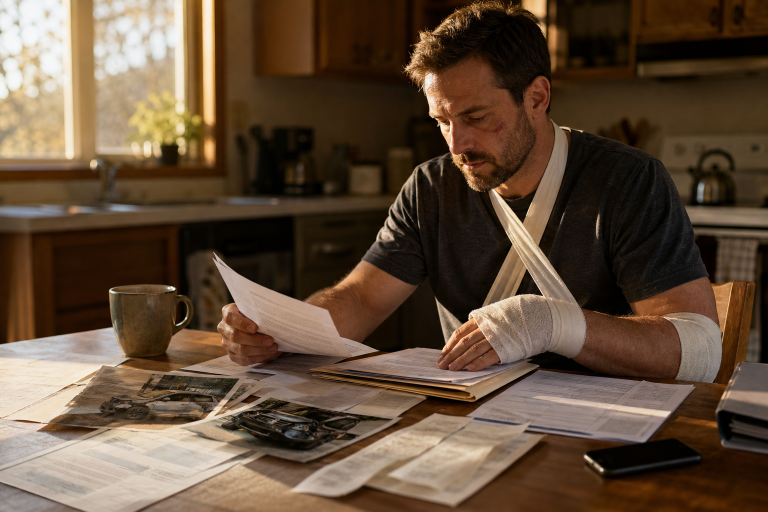
A personal injury claim is typically supported by records rather than memory alone. Start one paper or digital accident file and add documents as they arrive. Useful materials include:
- Crash, incident, or police reports.
- Photographs, videos, witness information, and damaged property.
- Medical visit summaries, bills, prescriptions, test results, and treatment plans.
- Repair estimates, towing charges, rental costs, and receipts for transportation.
- Pay stubs, employer letters, or tax records showing missed work or reduced earnings.
- A dated journal describing symptoms, appointments, limitations, and activities that have become harder.
Continue treatment as directed and communicate honestly with medical providers about symptoms and limitations. Gaps in care do not automatically defeat a claim, but they may prompt questions about whether an injury was caused by the accident or how serious it is. A clear treatment timeline can help explain what happened.
Notifying Insurance Companies
Most policies require prompt notice of an accident. When reporting a claim, provide basic identifying information and accurate facts about the date, location, vehicles, and people involved. Keep the claim number, adjuster’s contact information, emails, letters, and notes from every conversation.
It is reasonable to be careful with broad statements such as “I am fine” or “the accident was my fault” when the full facts and medical condition are not yet known. Before providing a recorded statement, signing medical authorizations, or accepting payment, read the request closely and ask questions about its purpose. An insurer has a role in evaluating the claim, but its financial interests may differ from those of the injured person.
How the Investigation and Valuation Stage Works
After notice, the insurance company may review reports, photographs, witness accounts, vehicle damage, medical records, coverage, and prior injury info. It might dispute fault, question if treatment was accident-related, or request more documentation. Cases with commercial trucks, motorcycles, bicycles, pedestrians, or multiple vehicles may need more investigation due to additional parties, policies, records, and safety issues. Claim value isn’t determined by a simple formula; it considers medical expenses, future care, lost income, reduced earning ability, property losses, pain, distress, and impact on daily activities. Insurance limits and evidence strength matter. Preserving damaged gear, clothing, safety equipment, or vehicle parts is crucial, especially for vulnerable road users.
Demand Letters, Offers, and Negotiation
Once the medical condition is better understood, the injured person or their representative may submit a demand package. It typically summarizes the incident, injury, losses, and includes supporting records. The insurer may accept, deny, request more info, or make a lower offer.
Negotiation often involves several rounds. A quick offer can be tempting with bills arriving, but it may overlook future treatment or developing limitations. Compare any offer with documented losses, future needs, and claim risks. Don’t rely on roadside arguments or assumptions when fault is disputed. Reports, evidence, witness accounts, and expert analysis provide a more reliable picture.
Settlement Agreements and Payment
If the parties agree on an amount, the insurer usually requires a release, a binding document that resolves the claim and prevents future claims for the same injury. Read it carefully to confirm who is released, what claims are covered, how bills or liens will be handled, and when payment is due. Payment may take time after signing, as the insurer processes the check and handles administrative steps. If no settlement is reached, the next step may involve negotiation, mediation, arbitration, or a lawsuit. Litigation includes discovery, depositions, motions, and trial prep, but many claims settle before trial.
Common Mistakes to Avoid
- Skipping medical care or minimizing symptoms after an accident.
- Discarding damaged property before it is photographed or evaluated.
- Repairing or selling a vehicle before documenting its condition.
- Posting detailed accident, injury, or activity updates on social media.
- Failing to track missed work, household assistance, travel costs, and out-of-pocket expenses.
- Accepting a settlement before understanding the full extent of the injury.
Final Thoughts
The settlement process is usually a series of careful steps, not a single conversation with an insurance adjuster. Prioritize safety, seek appropriate medical care, preserve evidence, organize records, and take time to understand any offer or release. A methodical approach can help injured people make informed decisions while they focus on recovery.
