
Key Takeaways
- Electrolysis can treat hair of every color, including blond, gray, white, red, and dark hair.
- Laser hair removal is usually faster for broad areas with dense, darker hair.
- Skin tone and the provider’s experience with appropriate equipment matter for laser safety and results.
- Both methods require multiple appointments because hair grows in cycles.
- Some people benefit from laser first, then electrolysis for scattered or lighter remaining hairs.
Choosing between electrolysis and laser hair removal is about more than finding the fastest appointment or the lowest advertised price. Your hair color, skin tone, treatment area, health history, and long-term goals all affect which option may be the better fit. For readers comparing laser services Beverly Hills MI, Electrolysis Clinic Of Birmingham offers information on both electrolysis and laser hair removal from its Beverly Hills, Michigan location. The practice serves Birmingham, Southfield, Oakland County, and the surrounding Southeast Michigan, offering years of experience providing permanent hair removal for men and women.
Both treatments can reduce the need for shaving, waxing, and plucking, but they work in very different ways. Laser uses concentrated light to target pigment in hair, while electrolysis treats one follicle at a time with a fine probe. Neither method should be chosen based on a single photo, promotion, or online review. A careful consultation helps set realistic expectations before treatment begins.
Why The Choice Matters In 2026
Hair removal is personal. Someone looking to clear a few chin hairs has different needs than someone seeking to reduce dense hair on the legs, back, chest, or underarms. Hormonal changes, medications, genetics, and hair location can also influence growth patterns. The best option is the one that fits your individual hair characteristics and your willingness to commit time, budget, and aftercare.
It is also important to separate realistic outcomes from marketing language. Electrolysis is designed to permanently disable treated follicles. Laser hair removal is generally discussed as long-term hair reduction because some follicles may continue producing hair or become active later. Results vary by device, settings, body area, hair thickness, and the number of sessions completed.
How Electrolysis Works
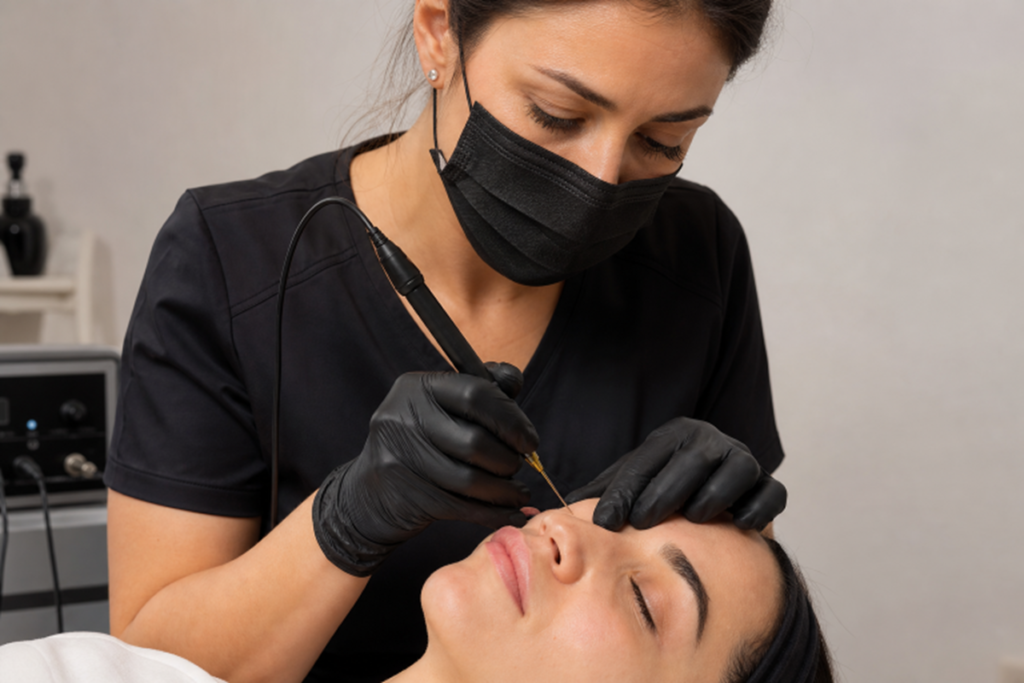
During electrolysis, a trained professional inserts a very fine probe into the natural opening of an individual hair follicle. Energy is applied to damage the growth center of that follicle, and the hair is then removed. Because the work is performed follicle by follicle, electrolysis is precise and does not rely on hair color.
Why People Choose Electrolysis
- It can work on light, gray, white, blond, red, and dark hairs.
- It is useful for small areas that need detailed shaping or cleanup.
- It can address individual hairs left after laser treatments.
- It may be a practical choice for facial hair and scattered growth.
- It does not require a strong contrast between hair color and skin color.
The trade-off is time. A larger area can require a substantial series of appointments because each follicle is treated separately, and only hairs in an active growth phase can be effectively targeted at a given visit. Proper technique and sterile equipment are essential. The American Academy of Dermatology’s overview of unwanted-hair removal options notes that electrolysis can permanently remove hair, while also stressing the importance of qualified treatment to help limit risks such as burns, infection, and scarring.
How Laser Hair Removal Works
Laser hair removal delivers controlled light energy into the pigment in the hair shaft. That energy travels toward the follicle, where it can damage structures involved in future hair growth. A treatment plan is spaced over several sessions so the provider can target hairs as they enter the most responsive phase of their growth cycle.
Why People Choose Laser Hair Removal
- It can cover larger areas more quickly than follicle-by-follicle treatment.
- It is often considered for legs, arms, backs, chests, underarms, and bikini areas.
- Regrowth may become finer, lighter in density, and easier to manage after a treatment series.
- When properly performed, recovery time is usually minimal.
Laser depends on pigment, so it generally responds best when hair is dark enough for the device to identify it. Very light blond, gray, white, and many red hairs may not respond well. Darker skin does not automatically rule out laser treatment, but the type of device, settings, cooling approach, and provider experience are especially important. Ask directly whether the provider has successfully treated people with your skin coloring.
Electrolysis Vs. Laser At A Glance
- Best for detailed work: Electrolysis is often preferred for individual facial hairs, brows, and small areas.
- Best for broad coverage: Laser is often more efficient for dense hair across larger body areas.
- Hair-color flexibility: Electrolysis can treat hair of any color. A laser typically performs best on darker hair.
- Skin-tone considerations: Both require skill, but laser treatment requires especially careful equipment selection and settings.
- Appointment pace: Electrolysis may take longer over a large area. Laser sessions are typically shorter for broad areas, though a full course still takes months.
When A Combination Approach May Make Sense
A combination plan can be useful when hair has mixed characteristics. For example, a person with dense dark hair on the legs may use a laser to reduce the overall volume, then choose electrolysis for the lighter hairs that remain. Someone with mostly blond or gray facial hair may skip laser and start with electrolysis instead.
This approach is not required and does not guarantee a particular result. It is simply one strategy that may help match the strengths of each treatment to the hair being addressed. A peer-reviewed comparison of laser hair removal and electrolysis provides useful background, but individual outcomes still depend on factors such as hair density, body area, treatment settings, and consistency.
Questions To Ask Before Booking
- Which method is most suitable for my hair color, thickness, and treatment area?
- How much experience do you have treating my skin tone?
- What device, laser type, or electrolysis method will you use?
- How many sessions might be needed, and how far apart will they be?
- What level of reduction or removal is realistic for me?
- What short-term reactions and possible side effects should I expect?
- Should I avoid tanning, waxing, retinoids, or specific medications before treatment?
- What is the plan if some hairs do not respond as expected?
Safety, Aftercare, And Final Decision Checklist
A quality consultation should include a review of medications, recent sun exposure, skin conditions, history of keloids, hormonal changes, and sensitivity to light. Ask about sanitation, sterile probes for electrolysis, protective eyewear for laser procedures, test areas when appropriate, and written aftercare instructions.
Temporary redness, warmth, mild swelling, or tenderness can occur after either treatment. Gentle cleansing, avoiding unnecessary heat and sun exposure, and following provider instructions can support recovery. Contact a qualified medical professional promptly if you experience worsening pain, blistering, signs of infection, or unexpected skin changes.
- Choose electrolysis first if hair is very light, gray, white, red, scattered, or located in a small area.
- Consider a laser first if hair is darker, coarser, denser, and spread across a larger area.
- Ask about combined care if the laser may reduce most of the hair, but lighter hairs are likely to remain.
- Pause and seek professional guidance if skin is tanned, irritated, injured, or affected by a condition that could raise treatment risk.
The right choice depends on the person, not just the technology. Electrolysis offers precise follicle-by-follicle treatment across all hair colors. A laser can save time when treating broad areas of suitable darker hair. A thoughtful consultation can help you compare comfort, safety, cost, treatment pace, and long-term goals before moving forward.
