
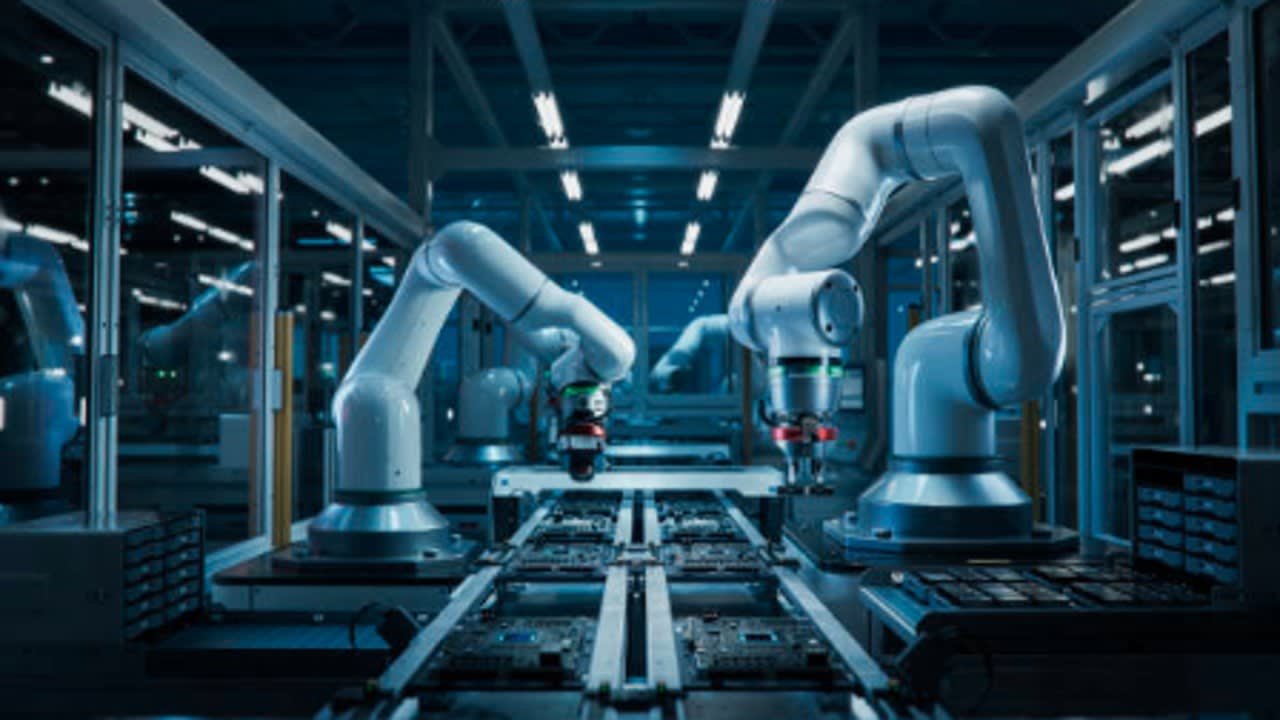
Around the world, manufacturing systems are being redesigned from scratch. This is why the move to industrial automation is not a trend − it is an engineering response to speed, precision, and scalability challenges for human today.
This means, with ever-increasing production pressures, that traditional processes are not designed to fulfill. Automated systems can.
Core Engineering Principles Behind Automation
Industrial automation works because, from an engineering perspective, it eliminates the variables that create variability. Automated systems are comprised of a rigid sequence of steps, monitored by sensors, and controlled by logic-driven algorithms.
Mechanical and electrical essentials include:
- Closed-loop control, which creates an ongoing feedback and control loop
- Use of servos and robotic arms to achieve repeat accuracy with precision actuation
- With programmable logic, systems can perform tasks on their own
- Acquisition of real-time data, enhanced decision-making and reduced speculation
It builds the groundwork that is needed to run standardized processes in factories at scale.
Architecture of the System: The Functionality and Working of Automated Environment
The current mode automated production line is the combination of layered. Every layer is unique and done through digital communication in the form of layers.
- Device Layer
Physical work is performed by sensors, actuators, motors, and other robotic tools. Each device sends data (temperature, pressure, vibration, torque).
- Control Layer
PLCs and microcontrollers work as both input and output devices and sense inputs and react accordingly. This is the layer that makes up the industrial automation “brain”.
- Supervisory Layer
SCADA systems monitor, visualize, and log real-time information from all devices. This layer is used by engineers for performance monitoring and troubleshooting.
- Enterprise Layer
Data moves in an upward direction, connecting to ERP systems. This results in a holistic inventory, output, energy consumption, and operational efficiency.
With this design, the factory never stops and is self-sustaining as much as possible with human intervention.
Engineering Benefits That Drive Adoption
The benefits from different kinds of industrial automation show up in the numbers when viewed with a technical mindset.
- Higher Precision and Repeatability
Automated motions eliminate human error. The tolerances are consistent production cycle after production cycle.
- Predictive Maintenance Capabilities
Sensors track system health. Engineering teams can catch faults early, which lowers downtime due to unplanned events.
- Improved Throughput
Automated lines run non-stop, without fatigue. All this means is that more units are produced per hour.
- Energy Optimization
Intelligent controllers are utilized and implemented for smart energy sustainability, focusing on the reduction of energy intake based on load conditions while eliminating wastage.
Integration Challenges Engineers Must Solve
Industrial automation is a powerful tool, but putting it to effective use is a matter of thoughtful engineering.
Common challenges include:
- Providing compatibility of old systems and new components
- Human–machine interaction safety protocols design
- Big data handling from high frequency sensors
- Securing networks against cyber threats
Planning, simulating, and testing everything will save the day from disruptions.
The Final Word − Automation as an Engineering Metric
Industrial automation is a game changer for manufacturing efficiency. It integrates mechanical design, electronics, control theory, and software engineering into one system.
Manual processes just don’t work anymore in a world where product cycles are shrinking and quality expectations are rising. Automation provides the most accurate, dependable, and scalable systems for the long term − exactly the engineering goals we strive for.
This gives manufacturers who employ these systems a concrete technical advantage. And those that fight this trend will find it hard to thrive in an era defining speed, precision, and smart orchestration.
