
Table of Contents
- Enhancing Safety Through Contextual Training
- Boosting Operator Confidence and Competence
- Reducing Operational Costs
- Adapting to Technological Advancements
- Compliance with Regulatory Standards
- Fostering a Culture of Continuous Improvement
- Real-World Examples of Successful Implementation
- Conclusion
Modern industrial settings demand a heightened focus on safety and operational efficiency. One key driver shaping this evolution is onsite forklift training. By immersing workers directly in their workplace environments, this training method delivers practical and immediate benefits. In fact, companies increasingly view onsite instruction as essential for meeting safety benchmarks and streamlining daily operations. For organizations looking to stay compliant and improve operator skills, onsite sessions are an ideal way to handle forklift OSHA certification renewal requirements while fostering a safer workplace culture.
As workplaces grow more complex and regulations become stricter, relying on standardized off-site training alone is no longer enough. Real-world instruction, tailored to actual job-site conditions, has become a cornerstone of effective safety strategy and legal compliance. This hands-on approach ensures that operators not only understand the machinery but also master the unique demands of their specific work environments.
Enhancing Safety Through Contextual Training
On-site forklift training is effective because it places operators directly in the environments where they will actually perform their tasks. This contextual learning allows them to navigate the real equipment and face the unique challenges of their workplace, improving both alertness and competency. According to data compiled by the National Safety Council, forklift accidents account for a significant share of workplace injuries in the United States each year. By training with the actual machines and layouts they’ll encounter, operators can identify site-specific hazards and prevent costly mistakes, making this training far more practical than generic instruction.
Boosting Operator Confidence and Competence
Training conducted at the jobsite leverages familiarity to build operator confidence. Employees who practice where they work quickly become comfortable managing real-world scenarios, such as navigating tight aisles, moving heavy loads, or adapting to sudden environmental changes. When workers know exactly what to expect from their machinery and surroundings, they handle their duties with greater assurance. This increased competence directly translates into fewer errors, a better safety record, and higher morale among staff.
Reducing Operational Costs
Organizations that incorporate comprehensive on-site forklift training often realize substantial cost savings across several key areas. Accidents involving forklifts can result in expensive machine repairs, workplace injury claims, and lost productivity due to downtime. Well-trained operators experience fewer incidents, saving the business money on both direct and indirect costs. In addition, ongoing training helps maintain equipment better, reducing wear and tear from improper use. For more detailed insights, consider recent coverage from Safety+Health Magazine on reducing forklift-related incidents using new methods and technology.
Adapting to Technological Advancements
As forklift technology evolves, so must the training practices. Modern forklifts often come equipped with telematics systems, automation features, and eco-friendly power options that differ from older models. On-site training ensures operators are well-versed in the latest technological advancements, including the specifics of lithium-ion electric systems, digital monitoring dashboards, and automatic braking features. This adaptability is crucial for companies seeking to stay ahead in increasingly automated warehouses. The latest industry trends and future predictions can be explored further by reviewing Forbes Tech Council’s insights on warehouse automation.
Compliance with Regulatory Standards
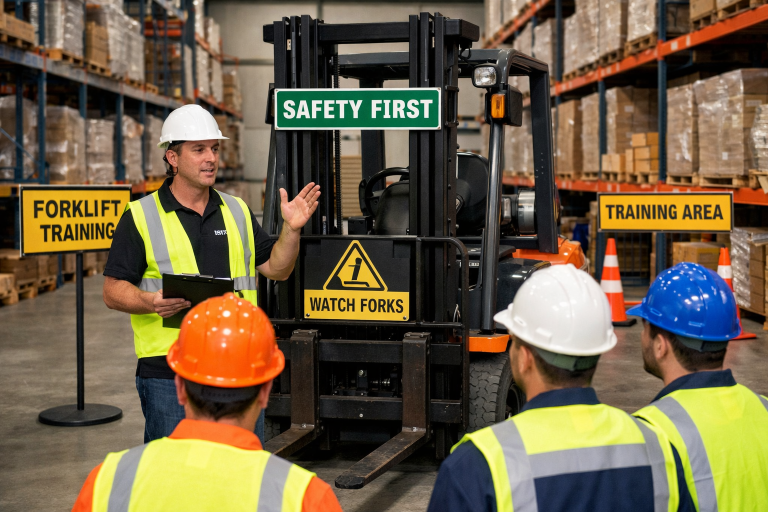
Meeting local, state, and federal regulatory requirements is a central element of safe and legal forklift operation. On-site forklift training ensures seamless integration with current OSHA mandates and any site-specific rules. Trainers can address workplace hazards and proper procedures while updating operators on evolving regulatory requirements, helping companies avoid fines and enhance their safety and reputation.
Fostering a Culture of Continuous Improvement
Continuous improvement is a hallmark of leading organizations, and regular onsite forklift training helps nurture this mindset. Scheduled refresher courses and the introduction of new safety techniques educate employees about best practices and reinforce a proactive approach to risk management. This regular, context-sensitive instruction demonstrates that the company values ongoing development and is committed to operational excellence.
Real-World Examples of Successful Implementation
Real-world results underline the value of onsite forklift training. For instance, a major logistics provider reported a decrease of more than 30 percent in equipment-related incidents within the first year of adopting a site-tailored training program. Their approach included addressing unique workflow challenges and using actual workplace layouts for drills. Other companies in manufacturing, distribution, and warehousing have similarly documented fewer injuries, higher productivity, and lower insurance costs after transitioning to workplace-based operator education.
Conclusion
On-site forklift training offers companies a strategic advantage by reinforcing safety, increasing efficiency, and helping them adapt to an ever-changing technological landscape. These programs help reduce costs, improve competency, and ensure legal compliance, all while fostering a culture rooted in learning and growth. For businesses aiming to keep pace with modern industrial demands, investing in on-site operator training is not only a sound regulatory move but one of the most forward-thinking investments they can make in both people and productivity.
